Clickable chart
Phu Quoc water temperature and the best months for a kayak day
Twelve months on the water
Seasons on Phu Quoc, month by month
Choose a month to see the daylight and what the tourism pages say.
Sunset
May
- Sun goes down about 18:18
The rainy season starts on the destination page; the weather guide still lists clear skies.2
Sunset is worked out for the 15th of each month on Indochina Time. Season notes come from Vietnam Tourism pages, not from a station: none sits close enough to the island.
A season guide built from official tourism pages: the dry and rainy months, where those pages disagree, what no page says about sea temperature, and how weather reshapes the day on the water.
Editorial team, phuquockayak.quest · Updated November 16, 2026 · 8 min reading time
Basics
- Dry seasonCalm seas, clear skies and the best beach weather from November to April.1
- Rainy seasonRougher seas and short heavy showers from May to October.2
- Storm monthsJuly to September is stormy, hot and humid.3
- Sea temperatureNo official page here gives one, so this page gives none.
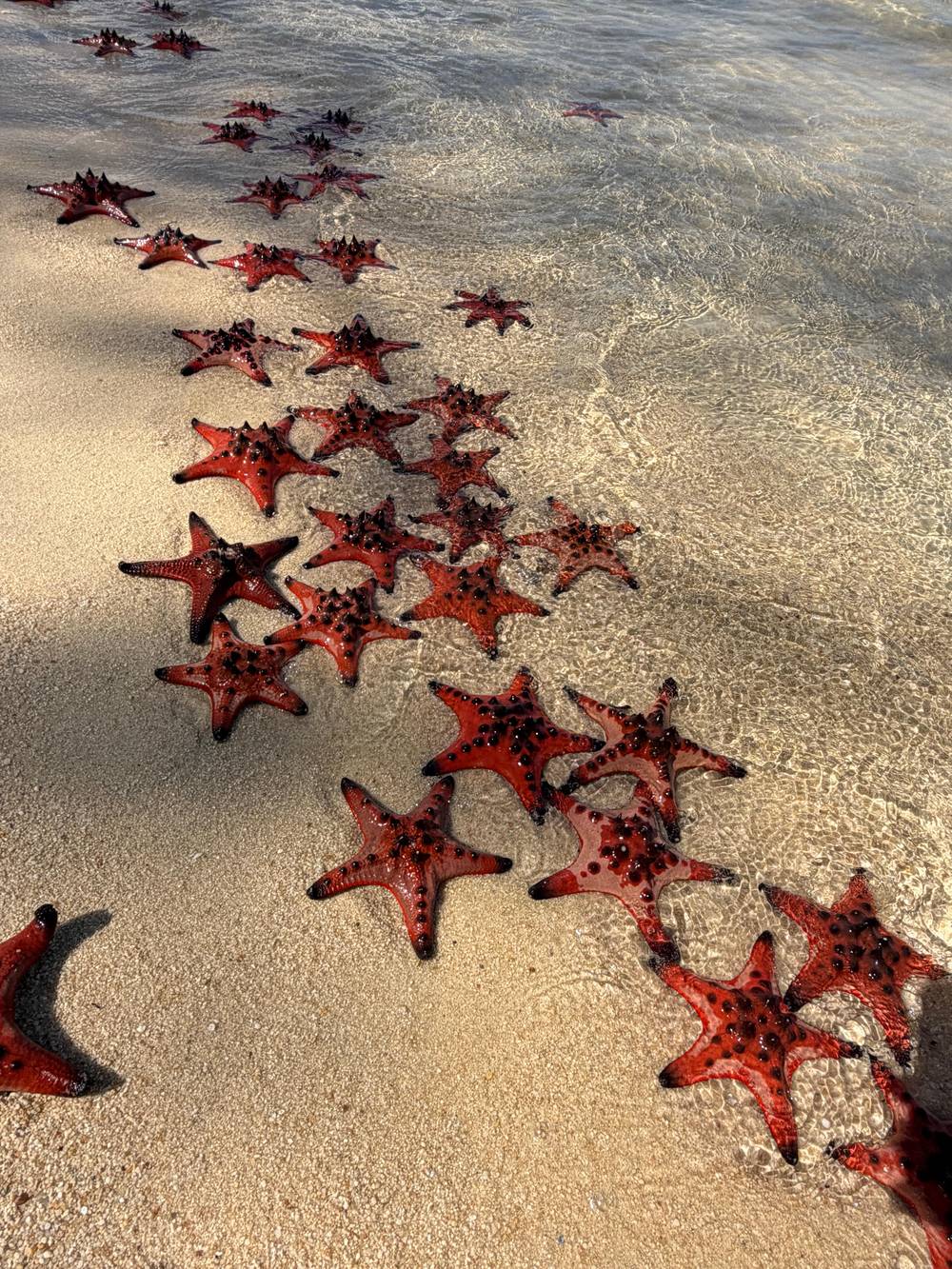
- StarfishA listing ties most sightings to the dry months, with no guarantee.
What the official pages say about the seasons
Several pages on the national tourism site describe Phu Quoc's weather, and they do not match exactly, which is worth knowing before you plan a day on the water. The Phu Quoc destination page calls November to April the calm, clear part of the year, with the island's best beach weather, and May to October the wet part, bringing rougher seas and short heavy showers.1,2 That is the plainest division of the year on offer.
A weather guide on the same site cuts it differently. It lists July to September on Phu Quoc as stormy, hot and humid, and October to June as clear skies, hot and sunny.3 Its advice is to skip July through September, a stretch in which storms make ferry crossings dangerous and the beaches less pleasant.4 Another page, about islands in Vietnam, says skies are clear and sunny from November to March, the best months for the beaches.5
Put together, the pages agree on a core: November to March is the safest window, and July to September is the one to treat with care. The edges vary by page. May, June and October fall in the rainy season on one page and in the clear stretch on another. A plan to kayak in Phu Quoc follows the same logic. Plan around the core, and treat the edge months as a choice that calls for a forecast a few days ahead and a flexible booking.
The sources
Phu Quoc's seasons by page
| Page | Good window | Poor window | Sea note |
|---|---|---|---|
| Destination page | Nov to Apr1 | May to Oct2 | Calm, then rougher1 |
| Weather guide | Oct to Jun3 | July to September4 | Ferrying dangerous in storms4 |
| Islands page | November to March5 | Not stated | Skies clear and sunny5 |
| Site tour listing | Starfish Nov to Apr | Weather swap | Beach stop can change |
These pages belong to the Vietnam National Authority of Tourism; the windows are theirs, and the listing lines are operators'.1
The water temperature question
The Phu Quoc water temperature is the figure many visitors look for before a kayak day, and no official page we read states a sea temperature. Vietnam Tourism says only that Phu Quoc promises balmy weather year-round and has some of the best beaches in Vietnam.6 Giving a figure from memory or from a travel blog would break this site's rule of stating only what a source states, so we leave the number out.
What the sources do establish is the context. The dry season is described as calm seas and clear skies.1 Guests on the site's day tour swim at Starfish Beach as part of the program. Bring a thin shirt for the sun and quick-drying clothes, and ask the guide what the water feels like on the morning. The tour days are about what you do around the water, and the water itself is a secondary question until you reach the jetty or the shore.
If a precise number matters to you, check a current marine forecast on the morning of your trip, and ask the operator what guests wore the day before. The tourism pages do not cover wind or tide either, so ask the guide about both. The practical rule is simple: take sun protection, a dry change of clothes and a plan for a short shower. Note the answer before you decide what to pack.
Where the pages agree
Months of calm, clear weather by source
The dry months, November to April
The dry months are the safe choice for a kayak day. Vietnam Tourism marks November to April as the stretch of calm seas and clear skies, with the island's best beach weather,1 and says December and January are a sublime tropical escape.7 The narrower page says skies are clear and sunny from November to March.5 On a tour, calm water and clear skies are the conditions that keep the river and the beach on schedule.
Starfish are part of the case. A full-day listing records that the animals are seen most often between about November and April, with no promise attached. The same period suits the northern forest trails, which Vietnam Tourism describes as leading to streams, viewpoints and quiet beaches.8 A dry-season day can put kayaking, the beach and a short hike together in a single trip. Plan the booking too, and keep the weekday and the date flexible if the forecast moves.
Plan the booking too. We have no source for crowd levels on the northern tours, so we do not describe them, but the cancellation terms on the site's tour, until 24 hours before the start, let you hold a place and change plans when the forecast moves. The same listing lets you pay later, which secures a seat without a payment on the spot. A spare day in the diary makes an easy fallback for families.
Choose your month
Which month suits your kayak day?
Match your travel dates to the season.
If I can travel in December or January
Book the kayak day then
Vietnam Tourism calls them a sublime tropical escape.7
If I want a good chance of starfish
Aim for the dry months
A listing links most sightings to those months.
If I am traveling in May, June or October
Keep the booking flexible
If I am traveling from July to September
Prefer land and river days
Storms make ferrying dangerous.4
If I need to know the water temperature
Check a forecast that day
No page here gives a sea temperature.6
If I am unsure about the forecast
Use free cancellation
Cancel up to 24 hours ahead.
The rainy months, May to October
The rainy months are not a closed season for the north of the island, and a flexible plan works in most of them. Vietnam Tourism ties May to October to rougher seas and short heavy showers,2 and the weather guide marks July to September as the stormy stretch.3 The note about ferries matters if your plans include boat transfers: storms make ferrying dangerous and the beaches less than ideal in those months.4
A river paddle is a different matter from a boat crossing, as it takes place on a river rather than open water. The site's tour is a land and river day, and the listing's own answer to bad weather is to swap the beach stop for another one: Rach Vem Beach is changed to Ganh Dau Beach. A private northern tour warns that its itinerary may change with weather or sea conditions, and a private jeep tour promises a full refund if weather forces a cancellation or a major change.
Practical choices help. Pack a rain shell, a sealed pouch for your phone and shoes that drain, and carry a small towel for the minibus ride back. Check the forecast the day before, read the listing's weather clause and keep your booking flexible. In the storm months, think twice about open-water tours and prefer the land and river format. Keep your phone charged for the pickup call and the weather updates from the operator.
Count the cost
Compare kayak days for your dates
Enter your group size and compare the shared options.
Compare 4 side by side
Compare kayak days for your dates
Enter your group size and compare the shared options.
- Site day tour8 hours · for each guest from $48
≈
View - Full northern day8 hours · for each guest from $63
≈
View - Kayak and lunch6 hours · for each guest from $75
≈
View - Basket boat ride40 minutes · for each guest from $8
≈
View
Starting prices on GetYourGuide, exchanged at the ECB reference rate. The booking page gives the exact price.
The year
The year for a kayak day, from storms to calm
November to March
The clear window
Skies are clear and sunny, the best beach months.5
April
The dry season closes
The dry season runs to April.1
May to June
The edge months
The rainy season starts, or the sky stays clear, by page.2,3
July to September
The storm months
Storms make ferrying dangerous.4
October
Another edge month
Sunrise, sunset and the length of the day
The tour does not depend on a particular sunrise or sunset, as it runs through the middle of the day. It starts at hotels in Duong Dong and returns around 4:00 PM. The sun tool above works out daylight for each month from the island's position, so you can see how much light is left when the van drops you at the hotel. The sun tool's month buttons show the length of the day at a glance.
Sunsets are an evening plan. Vietnam Tourism describes Long Beach, a 20-kilometer stretch up the west coast, as the most popular sunset spot, with cafes and bars behind the sand.10 Ganh Dau Cape in the north is the quiet alternative, where the sunset turns moored fishing boats into black silhouettes.11 With the day tour ending at 4:00 PM, a sunset visit is a separate trip that you arrange with your hotel or a driver.
The bee farm's open hours matter on the morning. The 2021 profile says entry is free between 9am and 5pm, so a start in the morning fits the visiting hours.12 Plan the farm stop around that window, and remember the Wednesday closure and the maintenance break from August 1 through September 2 in 2026. Always confirm hours on your own date, as a profile is not a timetable. Opening hours can change without notice.
Video
Phu Quoc weather guide and the best time to visit
Asia Pioneer Travel on YouTube · Video data is requested only when you tap play.
During these months some storms roll through, making ferrying dangerous and the beaches less than ideal
Before you go
A checklist for weather risk
Check3
- Pick a tour you can cancel until 24 hours before the start
- Look at the forecast late the day before and at breakfast
- Read the listing's weather clause
Pack3
- A thin rain shell and a sealed pouch for the phone
- Sun cream and a thin shirt, not a wetsuit
- Dry clothes for after the swim
On the water3
- Wear the life jacket and fit it9
- Tell the guide if conditions look rough to you
- Ask what replaces a stop if the weather turns
How weather changes the kayak day
Weather changes a day in small ways, and the listings show what moves. The beach stop moves from Rach Vem to Ganh Dau in poor weather on the site's tour. Another private northern tour keeps the right to alter its itinerary with the weather or sea conditions. The kayak segment sits on a river inside the northern landscape, so check with the operator that morning whether the river segment still runs in rain.
Safety gear matters more when the weather is uncertain, and checking the fit takes a minute at the jetty. The kayak page on this site sets out the full life-jacket routine; in short, wear the jacket, strap it down and test it by raising your arms.9 A further point from the US National Park Service is that distance across water is greater than it looks.13 If conditions look rough to you, say so to the guide and ask for the safe option.
Booking rules give you room to wait. The site's tour can be cancelled free of charge up to a day before the start, and a seat can be held without paying up front. Use that for an edge month: book the date you want, check the forecast the day before and cancel if the sky looks wrong. The rule has a cut-off, so mark the time on your calendar, keep the confirmation email and message the operator if the pickup details are unclear.
A month-by-month plan
The 3 pages agree that November to March is clear, so book the kayak day for those months if you can choose. April is still dry on the destination page and clear on the weather guide.1,5,3 December and January receive the most praise.7 If your dates sit at the margin of the season, favor a morning start and a flexible booking. Treat December and January as the bookable heart of the year.
May and June sit in the rainy season on the destination page and in the clear stretch on the weather guide.2,3 For these months, expect showers and bring the rain gear for the river and the beach, and trust the forecast a few days out more than any season label. October is the same kind of month: the rainy season runs through it on one page, while the other lists it as clear and sunny.2,3
July to September is the stretch to treat with care, as the weather guide lists it as stormy, hot and humid.3 That does not mean every day is lost, and a clear morning is still possible. It means a flexible plan, a cancellation window you can use and a willingness to swap a boat day for a land day. The table and the sun tool on this page set these months side by side, and the decision rows below help you choose.
FAQ
Fast, clear answers, short.
When is the best time to kayak on Phu Quoc?
What is the water temperature on Phu Quoc?
Vietnam Tourism says only that the island promises balmy weather year-round.6
Which months have storms?
The weather guide lists them as stormy, hot and humid.3
Is the rainy season a bad time to go?
Rougher seas and short heavy showers fall between May and October.2
What happens to the tour when the weather is bad?
Rach Vem Beach is changed to Ganh Dau Beach on the site's tour.
Can I cancel if the forecast looks wrong?
The site's tour offers free cancellation until then.
When are starfish easiest to see?
One full-day listing links the animals to the dry months.
Sources
- Vietnam National Authority of Tourism (vietnam.travel) · Phu Quoc ↩
- Vietnam National Authority of Tourism (vietnam.travel) · Phu Quoc ↩
- Vietnam National Authority of Tourism (vietnam.travel) · Weather and climate in Vietnam ↩
- Vietnam National Authority of Tourism (vietnam.travel) · Weather and climate in Vietnam ↩
- Vietnam National Authority of Tourism (vietnam.travel) · 7 incredible islands in Vietnam ↩
- Vietnam National Authority of Tourism (vietnam.travel) · Weather and climate in Vietnam ↩
- Vietnam National Authority of Tourism (vietnam.travel) · Weather and climate in Vietnam ↩
- Vietnam National Authority of Tourism (vietnam.travel) · Phu Quoc ↩
- US National Park Service · Stay Afloat: Always Wear a Life Jacket ↩
- Vietnam National Authority of Tourism (vietnam.travel) · Sunset in Phu Quoc ↩
- Vietnam National Authority of Tourism (vietnam.travel) · Sunset in Phu Quoc ↩
- Viet Nam News (Viet Nam News Agency) · Farm offers fresh look at life of bees ↩
- US National Park Service · Stay Afloat: Always Wear a Life Jacket ↩
Also worth reading